
Introduction
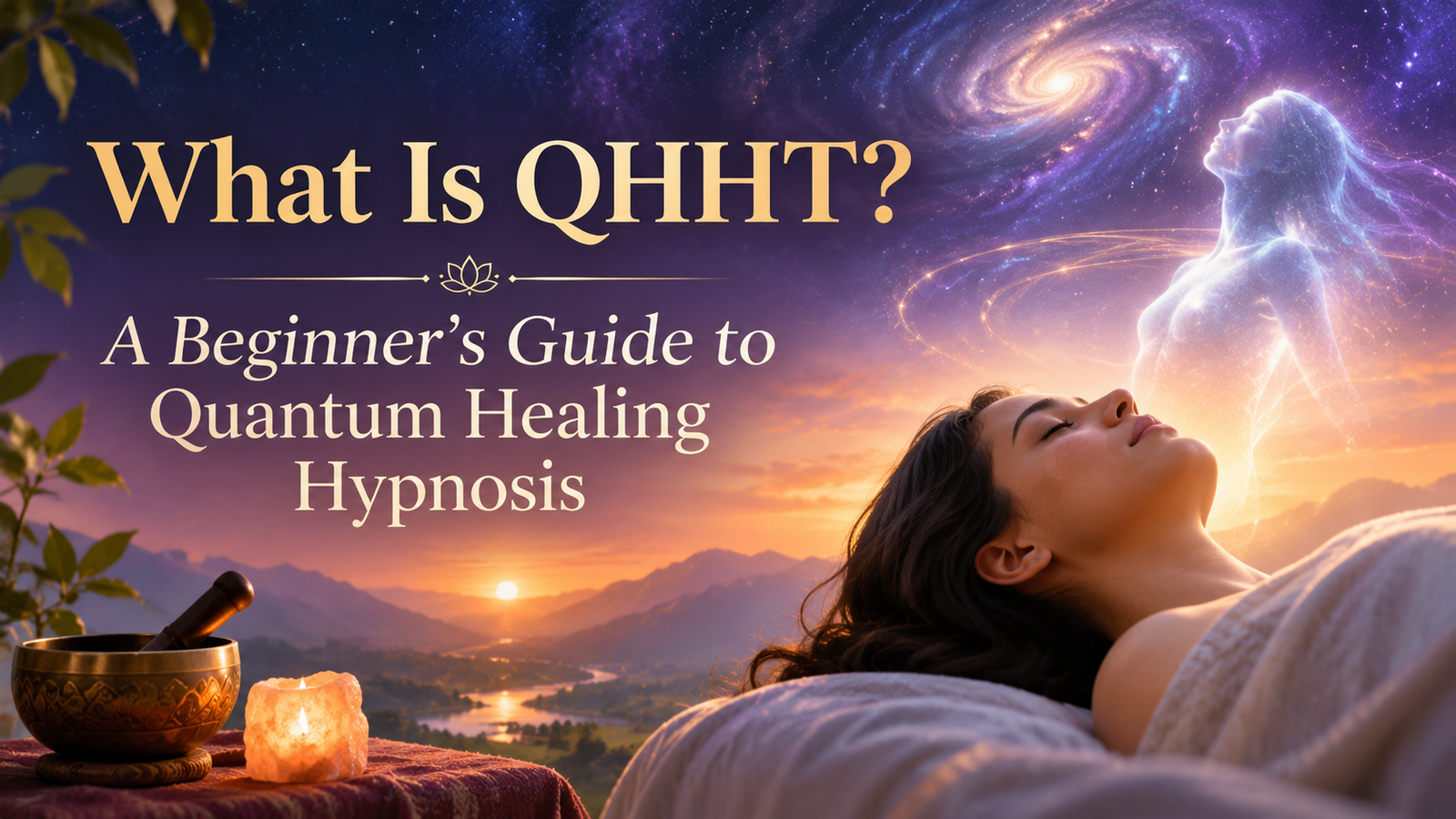
QHHT stands for Quantum Healing Hypnosis Technique, a long-form hypnosis method created by the American hypnotherapist Dolores Cannon. A session guides you into a deeply relaxed state, often through a past-life scene, and then asks questions you prepared beforehand. Practitioners describe the answers as coming from your “subconscious” or “higher self”.
Interest in Quantum Healing Hypnosis has grown because people want a slower, more reflective way to explore health worries, relationships, purpose and life patterns. It also raises fair questions. Is it hypnosis, spirituality or something else? What does a session involve? What does the evidence say?
This guide gives direct answers. You will learn what QHHT is, how a session is structured, what is traditionally claimed, what science does and does not support, who should be cautious, and how it differs from Vedic astrology, which readers in Dehradun and across Uttarakhand often explore alongside it.
What Is QHHT? The Short Answer
QHHT is a structured hypnosis session developed by Dolores Cannon (1931 to 2014). She reportedly worked for decades with regression hypnosis and named her method Quantum Healing Hypnosis Technique in the early 2000s. It is now taught through certified practitioner programs and offered worldwide, in person and online.
Hypnosis itself has a clear definition. The American Psychological Association’s Division 30 describes it as a state of focused attention and reduced peripheral awareness with an increased capacity to respond to suggestion. QHHT builds on that state and adds spiritual elements, including past-life imagery, a conversation with the “subconscious” and a body scan for healing.
What “Quantum” Means Here
The word “quantum” in QHHT is a branding choice rather than a reference to quantum physics. There is no established scientific link between quantum mechanics and hypnosis. Practitioners use the term to suggest deep, transformative change. It is useful to know this before booking, so you are not misled by the name.
Who Was Dolores Cannon?
Cannon was a hypnotherapist and author who wrote many books about her client sessions, including accounts of past lives and spiritual themes. Her work is widely respected within spiritual communities. It is considered a belief-based or practitioner-led approach, not a clinically validated therapy.
How a QHHT Session Works
A QHHT session is longer than a typical hypnotherapy appointment. Many practitioners describe it as lasting several hours, so confirm the duration with your practitioner. The flow generally looks like this:
- Interview: you discuss your background, health concerns and life questions. Many practitioners ask you to prepare a written list of questions beforehand.
- Induction: guided relaxation and visualization take you into a deeply relaxed, focused state.
- Scene or past-life imagery: you describe a place, a scene or a life that comes to mind.
- Question phase: the practitioner asks your prepared questions, and you answer from the state you are in.
- Body scan: the practitioner directs attention to areas of physical concern, accompanied by suggestions for healing.
- Return: you are guided back to ordinary awareness, often with time to rest and reflect.
Many practitioners record the session so you can listen again. Ask about this in advance.
What Does It Feel Like?
Most descriptions mention deep relaxation, vivid imagery and a sense of watching or narrating rather than being unconscious. You remain able to speak and are generally aware of what is happening. Experiences vary widely from person to person.
Quantum Healing Hypnosis vs Regular Hypnotherapy
Regular clinical hypnotherapy usually targets a specific goal, such as reducing anxiety, managing pain or quitting smoking. QHHT is exploratory and spiritual. The table below is described in words to keep this article plain text.
- Focus: clinical hypnotherapy works on a defined problem; QHHT is open-ended self-exploration.
- Duration: clinical sessions are typically shorter; QHHT sessions are long.
- Basis: clinical hypnotherapy is supported by research for some conditions; QHHT is a spiritual practice.
- Practitioner background: clinical hypnotherapists are often psychologists or licensed health professionals; QHHT practitioners are certified through the method’s own training.
What Do People Hope to Gain From QHHT?
People usually come with one of four aims:
- Reflection on recurring life patterns or relationships
- Clarity on purpose, career or direction
- Relaxation and a sense of emotional release
- Spiritual curiosity about reincarnation and the soul
These are personal motivations, not promised outcomes. No practitioner can guarantee a particular result, and you should be cautious of anyone who does.
What Does the Evidence Say?
The honest answer is that hypnosis has genuine research support for some uses, while QHHT’s specific claims have not been scientifically validated.
What Research Supports
The US National Center for Complementary and Integrative Health notes that a growing body of evidence suggests hypnosis may help manage some painful conditions, though the overall evidence for other uses is mixed and sometimes low in quality. A 2024 review of 49 meta-analyses found the most robust evidence for hypnosis in patients undergoing medical procedures and in patients with pain. These findings concern clinical hypnosis, not QHHT.
What Research Does Not Support
There is no scientific evidence that past-life imagery during hypnosis reflects real previous lives. Memory researchers caution that imagery produced under hypnosis can blend imagination, suggestion and previously absorbed material. There is also no evidence that QHHT cures disease. Treat any claim of physical healing as a belief held by practitioners, not as medical fact.
Practitioner Beliefs vs Scientific Evidence
- Practitioner belief: the “subconscious” or “higher self” can provide guidance and healing.
- Cultural and spiritual belief: souls reincarnate and carry lessons across lifetimes.
- Scientific evidence: hypnosis may help with pain and procedural anxiety; the rest is unproven.
Respecting all of these views is reasonable, provided they are kept distinct.
Who Should Be Careful?
Speak to a doctor or qualified mental health professional before booking if you:
- Have a diagnosed psychiatric condition, including psychosis or severe trauma
- Are currently under treatment for a medical condition
- Are pregnant or have a serious medical issue
- Feel emotionally unstable or are in distress
QHHT should never replace medical care, therapy or professional advice. A responsible practitioner will ask about your health history first and will not ask you to stop treatment.
How to Choose a Practitioner
- Check their training and certification, and ask which body certified them
- Ask for a clear description of the session, duration and fee in advance
- Avoid anyone who promises cures, guaranteed answers or specific life outcomes
- Prefer practitioners who encourage you to continue medical or psychological care
QHHT and Vedic Astrology: How They Differ
Both QHHT and Vedic astrology are interpretive, belief-based practices that people use for reflection. They work differently.
Vedic astrology starts with a birth chart (Kundli) calculated from your date, time and place of birth. It reads planetary positions, houses, nakshatras and dashas to discuss life themes and timing. QHHT starts with a guided hypnotic state and relies on your own inner imagery.
Indian traditions have long discussed karma and rebirth, so some readers find the two practices complementary. Neither is a scientifically validated way of predicting events, and neither should replace professional advice on health, money or law.
QHHT and Astrology: Where an Astrology Consultation Dehradun Can Fit
If your questions are about timing, such as career phases, relationships or planetary periods, a birth chart reading is the more direct tool. If your questions are about inner patterns and feelings, a reflective practice may appeal more. Many people in Dehradun, Rishikesh and Haridwar explore both. For chart-based guidance, you can Consult Charul Sharma for an astrology consultation Dehradun residents can attend or arrange online.
Frequently Asked Questions
1. What is QHHT?
QHHT is the Quantum Healing Hypnosis Technique, a long-form hypnosis method created by Dolores Cannon that combines guided relaxation, past-life imagery and a question-and-answer phase.
2. Is Quantum Healing Hypnosis real hypnosis?
Yes, it uses hypnotic induction, which is a recognised technique. The spiritual claims layered on top of it, such as past lives and higher-self communication, are belief-based.
3. How long does a QHHT session last?
Sessions are generally long, often several hours, though it varies by practitioner. Ask for the exact time and what is included.
4. Is QHHT scientifically proven?
No. Hypnosis has research support for some uses such as pain management, but QHHT’s specific claims, including past-life recall and healing outcomes, have not been scientifically validated.
5. Is QHHT safe?
Hypnosis is generally considered safe when delivered by a trained practitioner, but it may not suit people with certain mental health conditions. Check with a doctor first if you have any concerns.
6. Can QHHT cure illness?
There is no evidence that it cures illness. It should be used only as a complement to, never a replacement for, medical care.
7. Should I choose QHHT or an astrology reading?
They serve different purposes. A birth chart reading focuses on timing and life themes, while QHHT is exploratory self-reflection. If you want chart-based guidance, you can Consult Charul Sharma.
Conclusion
QHHT is a distinctive, long-form hypnosis practice that blends relaxation, imagery and spiritual belief. It can be a meaningful experience for people who value reflection, as long as they understand it is not medically or scientifically proven to heal or to reveal past lives. Choose a trained practitioner, keep your medical care in place and keep expectations realistic.
CTA
If you are looking for structured, chart-based guidance on timing, relationships or career, you can book a consultation with Charul Sharma and discuss your birth chart in a clear, balanced way. Consult Charul Sharma to explore how Vedic astrology can support your reflection, without guarantees or fear-based claims.