

Introduction
Manglik Dosha is one of the most discussed terms in Indian marriage conversations, and one of the most misunderstood. It refers to a specific placement of Mars in a birth chart that traditional Vedic astrology links with friction in marriage and partnership. For many families in Dehradun and across Uttarakhand, the word alone can delay a proposal or cause anxiety before anyone has studied the chart properly.
The reality is more measured than the rumours suggest. Astrologers do not read the placement in isolation, and classical texts describe several conditions under which the dosha is reduced or cancelled. Treating it as a verdict on a person’s future ignores that nuance, and it often leads families to make rushed or fearful decisions.
This article explains what the dosha is, how it is identified, which myths deserve to be set aside, and which traditional remedies people commonly follow. It also covers how kundli matching handles the issue and when professional guidance is worth seeking, so you can approach the subject with clarity and a sense of proportion.
What Is Manglik Dosha in Vedic Astrology?
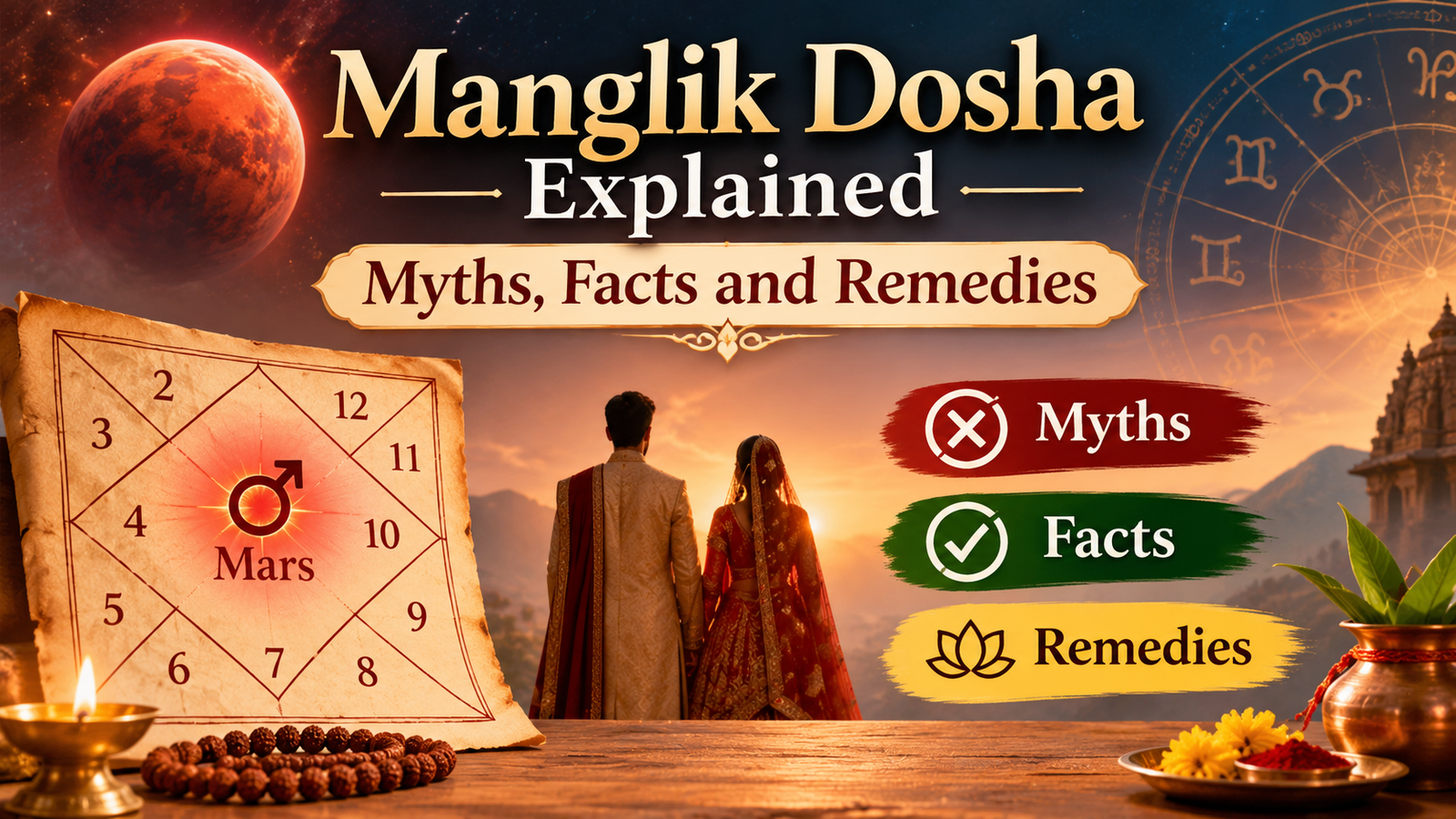
Manglik Dosha, also called Mangal Dosha or Kuja Dosha, is a condition in a Vedic birth chart in which Mars (Mangal) sits in certain houses counted from the Ascendant (Lagna). The houses most traditionally named are the first, fourth, seventh, eighth and twelfth. Some astrologers also include the second house.
In Vedic astrology, Mars represents energy, courage, ambition and assertiveness. It is also associated with impatience, anger and conflict. When Mars occupies houses connected with the self, home and partnership, traditional interpretation says these qualities may show up as intensity within close relationships. This is an astrological interpretation, not a scientifically established fact.
Which Houses Create the Dosha and What Do They Signify?
Each house carries its own traditional meaning, which is why the same planet is read differently from one placement to another.
- First house: personality and temperament. Strong assertiveness may be perceived as dominance.
- Second house (included by some astrologers): speech and family life. Sharp words are the usual concern.
- Fourth house: home, comfort and emotional peace. Domestic tension is the usual concern.
- Seventh house: marriage and partnership. This is considered the most direct placement for relationship themes.
- Eighth house: shared resources, intimacy and sudden change. It is associated with unpredictability.
- Twelfth house: private life, expenses and withdrawal. It is linked with distance or hidden strain.
Is Mars Also Counted From the Moon and Venus?

Yes. Many astrologers check the position of Mars from the Moon (Chandra Lagna) and from Venus as well as from the Ascendant. A chart may therefore show the dosha from one reference point and not from another. This is one reason two astrologers sometimes give different answers. An accurate birth time, date and place are essential, and a well-prepared birth chart is the starting point for any reliable assessment.
Why Mars Receives So Much Attention
Astronomically, Mars is the fourth planet from the Sun, and its reddish colour comes from iron oxide, commonly known as rust, in its surface dust, as NASA’s Mars overview explains. That is the scientific description. The meanings Vedic astrology attaches to Mars, such as courage, aggression and drive, come from tradition and symbolism, not from physical measurement.
It also helps to keep the numbers in perspective. If Mars were equally likely to fall in any of the twelve houses, five of twelve houses would cover roughly 42 percent of charts. Actual distributions are not perfectly even, but the arithmetic shows why the placement is common rather than rare. A very large number of people carry it, which is a good reason to avoid treating it as a unique misfortune.
Common Myths About Manglik Dosha
Myth 1: A Manglik person cannot have a happy marriage
This claim has no reliable support, either in astrology or in observation. Marital satisfaction depends on communication, respect, shared values, family support and emotional maturity. Traditional astrology describes the placement as a theme to be understood and balanced, not as a fixed outcome.
Myth 2: A Manglik and non-Manglik marriage always leads to harm
Many traditional sources suggest that the effect is considered balanced when both partners carry a comparable Mars placement. Even so, the presence or absence of the dosha is only one factor among many in matching two charts. Several other chart features may support or soften it.
Myth 3: It is a curse that affects everyone equally
The term itself, dosha, means a flaw or imbalance, not a curse. The strength of the placement varies with the sign Mars occupies, the planets that aspect or join it, and the period of life being examined. Two people with the same placement can have very different chart readings.
Myth 4: Only expensive rituals can fix it
This is perhaps the most harmful myth. Some people are pressured into costly pujas or gemstones out of fear. A responsible astrologer explains the chart, discusses options calmly and never makes a remedy sound mandatory. If someone insists that only a high-priced ritual can save your marriage, treat that as a warning sign.
Facts: How Astrologers Actually Assess the Dosha
A careful reading looks beyond the house number. These are the usual considerations:
- The sign Mars occupies and whether it is strong or weak there
- Aspects from other planets, especially Jupiter
- Conjunctions with planets such as the Moon, Jupiter or Saturn
- The seventh house, its lord and Venus, which relate to partnership
- Mars in the Navamsa (D9) chart
- The running planetary period, since Planetary Dashas influence when themes become active
- The partner’s chart, which determines how the two charts interact
Classical texts and later practitioners describe several situations in which the dosha is considered reduced or cancelled. Commonly cited ones include:
- Both partners having the placement
- Mars being in its own sign (Aries or Scorpio) or exalted (Capricorn)
- Mars being aspected by Jupiter
- Specific sign and house combinations, which vary by text
Popular belief also holds that the intensity eases with age, often after about 28. This is a folk rule, not a universal principle, and astrologers differ on it.
These cancellation conditions are not interchangeable, and a quick online calculator rarely applies them correctly. That is why a manual chart review matters.
Traditional Remedies and How to Approach Them

Commonly Followed Practices
Remedies for this dosha come from religious and cultural custom. Common ones include:
- Reciting the Hanuman Chalisa, especially on Tuesdays
- Observing a Tuesday fast
- Performing a Mangal Shanti puja. The Mangalnath temple in Ujjain is traditionally associated with this
- Donating items linked with Mars, such as red lentils, on Tuesdays
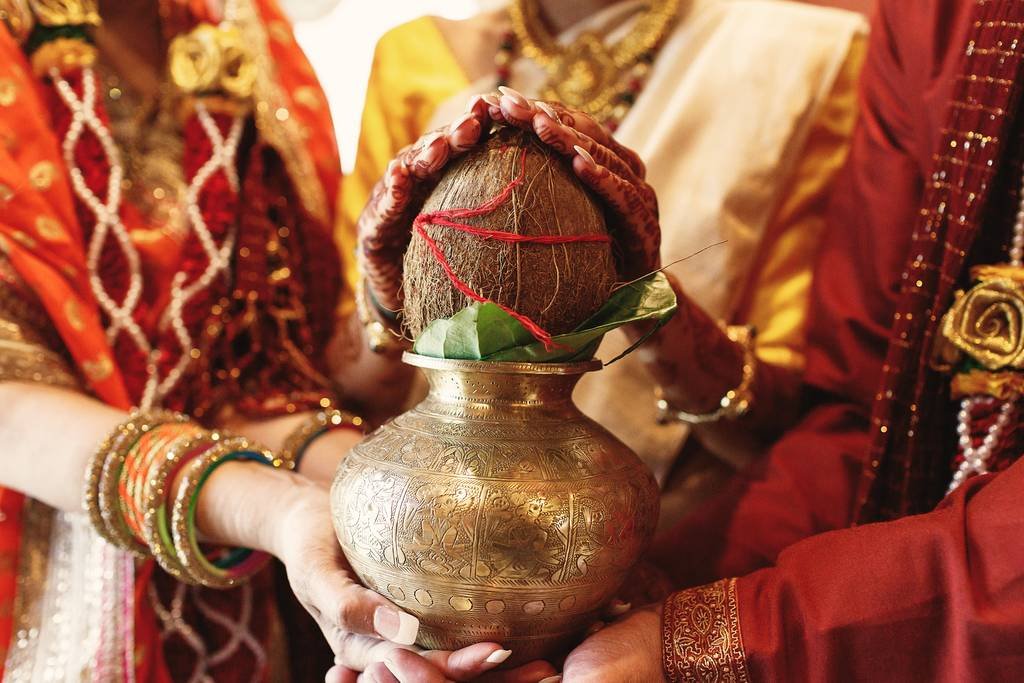
- Kumbh Vivah, a symbolic ritual marriage to a pot or tree before the real wedding, followed in some families
These are faith-based practices. They have not been scientifically tested for changing marital outcomes, and many people follow them for reassurance and spiritual discipline rather than for a measurable result.
A Note on Gemstones
Red coral is the stone traditionally linked with Mars. Gemstones should never be worn on a generic recommendation. Depending on the chart, strengthening Mars can be inappropriate, and a stone is a significant expense. If you are considering one, discuss it with a qualified astrologer who has studied your complete chart.
Practical Steps That Do Not Depend on Astrology
Whatever your beliefs, the themes linked with Mars are ones that couples can work on directly: managing anger, listening patiently, discussing expectations before marriage and seeking premarital counselling if needed. These steps are useful regardless of any chart, and they should never be skipped because a ritual has been performed. Astrology should also not replace qualified legal, medical or financial advice on marriage decisions.
Kundli Matching and the Dosha: What to Check Before Marriage
In most families, the dosha is examined during kundli matching. The traditional Ashtakoota system scores compatibility out of 36 points, and the Mars placement is evaluated separately from that score. A high Guna score does not automatically cancel it, and a low score does not automatically make a match unsuitable.
When reviewing kundli matching in Dehradun or elsewhere, ask the astrologer to explain which factors were considered, which cancellations apply and how the two charts relate. A good explanation should leave you more informed, not more anxious. It should also remain one input into a decision that includes the couple’s own compatibility, values and family circumstances.
When to Get an Astrology Consultation Dehradun Families Can Rely On
You may want professional guidance if you have been told you are Manglik but received conflicting opinions, if a proposal has been delayed because of the dosha, or if you have been advised to perform expensive remedies without a clear explanation. A proper astrology consultation Dehradun residents can trust starts with accurate birth details, reviews the chart from multiple reference points and explains conclusions in plain language.
If you want a personal chart review, you can Consult Charul Sharma for a calm, practical explanation of how the placement works in your own chart. When choosing among options, look for a best astrologer in Dehradun who avoids fear-based language, never guarantees outcomes and welcomes your questions. When you are ready, you can book a consultation with your birth details prepared.
Frequently Asked Questions
1.What is Manglik in simple terms?
It means Mars sits in certain houses of your birth chart, mainly the first, fourth, seventh, eighth or twelfth. Traditional astrology links this with intensity in relationships.
2. Is Manglik Dosha real?
It is a traditional concept in Vedic astrology and widely referred to in Indian culture. Astrology itself is not scientifically validated, so the dosha is best seen as an interpretive tradition, not a proven cause of marital outcomes.
3. Can a Manglik person marry a non-Manglik person?
Many families do so after a chart review. Traditional sources describe cancellation conditions and balancing factors, and compatibility depends on many other chart and personal factors.
4. At what age does the effect reduce?
A popular belief says it reduces after around 28, but this is a folk rule and astrologers do not agree on it.
5. Do remedies guarantee that the dosha is removed?
No. Remedies are traditional practices, and no astrologer can responsibly promise a specific result.
6. When should someone seek help about this?
Seek help if you have received conflicting readings, face pressure to perform costly rituals, or need a clear explanation before deciding on a match.
Conclusion
Understood properly, the dosha is a common chart feature that traditional astrology treats as one theme to evaluate, not a final judgement on a person or a marriage. Separate the myths from the traditional facts, ask for clear reasoning, and make marriage decisions on the basis of the whole picture. If you want an experienced, unhurried reading, you can Consult Charul Sharma and review your chart with a clear explanation of each factor.
CTA
If you are looking for personalised guidance based on your birth chart, you can explore an astrology consultation with Charul Sharma, where the focus is on explaining your chart honestly and without fear. To learn more about Charul Sharma’s background and approach, visit the About page, or Consult Charul Sharma and book a consultation to discuss your concerns in a private session.