
Introduction
Anyone choosing an astrologer eventually asks the same practical question: how does this person actually read a chart, and what will the session involve? Most websites list services and say little about method. This article explains how Charul Sharma works, from the first look at a birth chart to the way advice is framed, so you can decide whether the approach fits what you need.
Vedic astrology, known in Sanskrit as Jyotish, is a sidereal system that measures planetary positions against the fixed stars. A reading draws on the birth chart, the Moon’s nakshatra, planetary periods called dashas, and current transits. Two astrologers using the same system can still differ in emphasis, ethics, and communication, and those differences matter more than any list of services.
You will read how a chart reading is built, what a consultation covers, where tradition ends and scientific evidence begins, and which questions to ask any astrologer before committing. The goal is clarity rather than persuasion, so you can judge the approach on its merits.
What Jyotish Is and How It Differs From Western Astrology
Jyotish is the traditional Indian system of astrology, and its main structural difference from Western astrology is the zodiac it uses. Jyotish follows the sidereal zodiac, which is fixed to the stars. Western astrology mostly follows the tropical zodiac, which is fixed to the seasons.
The gap between the two, called the ayanamsa, is currently about 24 degrees. Most Indian practitioners use the Lahiri ayanamsa, which India’s Calendar Reform Committee adopted for the national calendar in the 1950s.
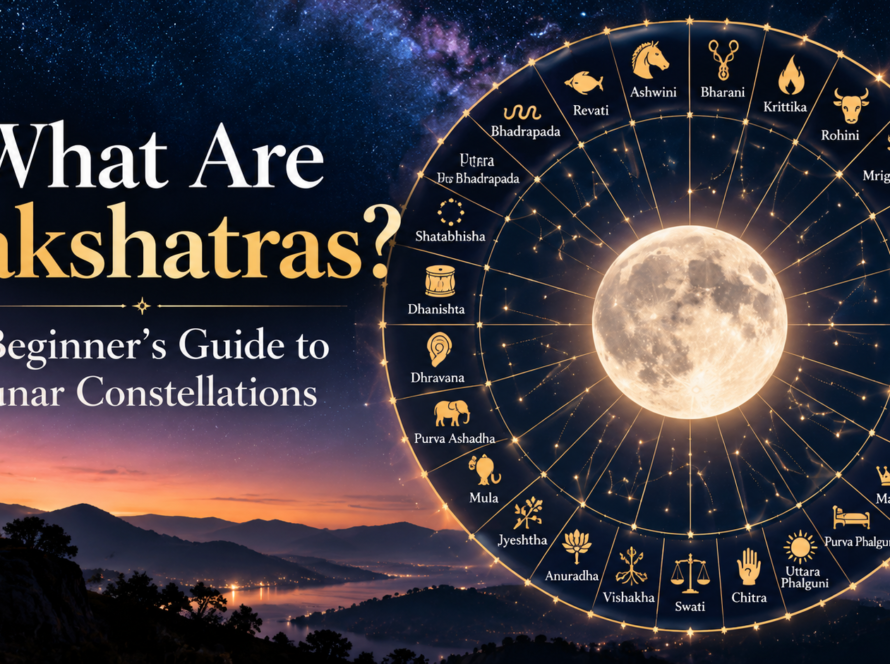
In practice, your Sun sign in Jyotish often differs from the one in a newspaper column. A person born in early April may be Aries in Western astrology and Pisces in Jyotish. The Vedic system also gives more weight to the Moon sign (Rashi), the rising sign (Lagna), and the 27 nakshatras, or lunar mansions.
Its classical foundation includes texts such as the Brihat Parashara Hora Shastra, traditionally attributed to the sage Parashara. These are traditional sources, not scientific ones, and the distinction matters later in this article.

Charul Sharma’s Background and Practice in Dehradun
Charul Sharma is an astrologer based in Dehradun, Uttarakhand, offering Jyotish consultations built around the birth chart. Charul Sharma’s background, including training, years of practice, and areas of focus, is described on the About page of this website and is worth reading before any session.
Background matters because astrology is not governed by a single statutory licensing body in India. Credibility comes from what a practitioner has studied, whom they studied with, how long they have practised, and how openly they describe their method.
When you evaluate any Vedic astrologer in Dehradun, look for those four things rather than dramatic claims or lists of awards. A practitioner who can explain how they reached a conclusion is usually more reliable than one who only states it.
The Principles That Shape the Approach
The approach rests on a few working principles. They explain why a reading feels different from a generic horoscope.
- Chart before conclusions: nothing is said until the birth details are checked and the chart is calculated.
- Context over single indicators: a planet’s effect depends on its sign, house, aspects, rulership, and the dasha running at the time. No single placement decides an outcome.
- Guidance, not guarantees: readings describe tendencies and periods to be mindful of, not fixed events.
- Plain language: technical terms such as Lagna, Mahadasha, or Navamsa are explained as they come up.
- Respect for your decisions: astrology is offered as one perspective, never as a replacement for medical, legal, or financial advice.
How a Birth Chart Reading Is Built, Step by Step

A birth chart reading is a sequence, and the order matters. Here is how a Jyotish reading typically moves from data to interpretation.
- Verify the birth details. Date, exact time, and place of birth are confirmed first, because every later step depends on them.
- Calculate the chart. Planetary positions are placed in signs and houses using a sidereal calculation, usually with the Lahiri ayanamsa.
- Read the Lagna and the Moon. The rising sign sets the framework of the twelve houses, and the Moon sign and nakshatra describe the temperament and mental patterns.
- Study the houses and their lords. Each house relates to an area of life, such as career, relationships, or home, and its ruling planet shows how that area is expressed.
- Check divisional charts. The Navamsa (D9) is commonly consulted to assess the strength of planets and to understand relationships.
- Place the dasha timeline. The planetary period running now, and the ones ahead, indicate when particular themes are emphasised.
- Review current transits. The present movement of planets such as Saturn and Jupiter is compared with the natal chart.
- Synthesise. The findings are weighed together and translated into practical, understandable guidance.
Why Accurate Birth Details Matter
Accurate birth time is the single biggest factor in the reliability of a Jyotish chart. The rising sign changes roughly every two hours, and a few minutes can move a planet into a different house or shift the divisional charts.
A hospital record or birth certificate is the best source. If your time is approximate, say so at the start. A responsible astrologer will tell you which parts of the reading are less certain and may suggest focusing on Moon-based interpretation, which depends less on the exact minute.
Dashas and Transits: How Timing Is Read
Dashas are the timing backbone of Jyotish. The most widely used system, Vimshottari dasha, divides a 120-year cycle among nine planets, and your starting point is set by the Moon’s nakshatra at birth.
Each planetary period highlights certain themes according to that planet’s placement in your chart. Transits add a second layer by showing how today’s sky interacts with your natal positions.
These are traditional interpretive tools. They suggest periods that may call for more attention, patience, or preparation. They do not predict specific events, and a careful practitioner avoids presenting them that way.
What a Consultation Covers
Consultations are organised around the questions you bring, rather than a fixed script. Common areas include:
- Birth chart (kundli) analysis and an overview of strengths and challenges
- Career direction and education choices
- Relationships and kundli matching before marriage
- Muhurta, the selection of favourable timing for events such as a housewarming or a business launch
- Understanding the current dasha and major transits
If your question is about timing, such as a marriage date or a new venture, consult Charul Sharma with your birth details ready and one specific question in mind. A focused question produces a more useful discussion than a general request to be told everything.

Traditional Vedic Astrology and Scientific Evidence
Astrology is a traditional interpretive system, not an established science. Controlled studies have generally not found that astrologers can predict personality or events reliably. A frequently cited example is Shawn Carlson’s double-blind test, published in the journal Nature in 1985, which found chart matching no better than chance.
Many people still use Jyotish for reflection, cultural continuity, and structure when thinking about decisions. That is a legitimate use, provided it is honest about what the practice is.
For this reason, readings should be treated as one input among many. Health, legal, and financial matters belong with qualified professionals, and astrology should never be a reason to delay medical care or ignore expert advice.
Questions to Ask Before You Book Any Astrologer
A short list of questions protects you from poor practice, whoever you choose.
- Which system and ayanamsa do you use, and why?
- Will you explain how you reached each conclusion?
- Do you offer guarantees? (A reliable practitioner will say no.)
- Are any remedies optional, and what do they cost?
- How will my birth data and personal details be handled?
Warning signs include fear-based language, pressure to buy expensive items, and certainty about death, illness, or exact future events. If a session leaves you more anxious than informed, the approach is not serving you.
Relevance for Readers in Dehradun and Uttarakhand
Many life events in Uttarakhand are scheduled with astrological timing in mind, from weddings to griha pravesh. That makes kundli matching and muhurta among the most practical reasons to seek an astrology consultation in Dehradun.
Dehradun is also easy to reach from Rishikesh, Haridwar, and Mussoorie, which makes it a convenient base for families across the region. If you are comparing options, the page on the best astrologer in Dehradun gives a wider view of what the practice offers.
When you are ready to book a consultation, prepare your birth details, a short list of questions, and any dates you are weighing for important decisions.

Frequently Asked Questions
1. What is Vedic astrology?
Vedic astrology, or Jyotish, is the traditional Indian system of astrology based on the sidereal zodiac. It interprets the birth chart, nakshatras, dashas, and transits to offer guidance on personality, timing, and life themes.
2. How accurate is a Jyotish reading?
Accuracy cannot be guaranteed, and astrology has not been validated by scientific testing. Readings are best treated as interpretive guidance whose usefulness depends on correct birth data, the practitioner’s skill, and your own judgment.
3. What details are needed for a birth chart reading?
You need your date of birth, exact time of birth, and place of birth. The place provides the latitude and longitude used to calculate the rising sign.
4. What if I do not know my birth time?
A reading is still possible, but it will be less precise. Moon-based interpretation can be used, and some house-level conclusions may need to be left open.
5. What is the difference between a kundli and a horoscope?
A kundli is your personal birth chart, calculated from your exact birth details. A horoscope in the popular sense is a general forecast based on a sun sign or moon sign and applies to everyone in that group.
6. Can astrology replace professional advice?
No. Astrology can add a perspective, but medical, legal, and financial decisions should be made with qualified professionals.
7. When should someone consult an astrologer?
People commonly seek a reading before a marriage, a career change, a major purchase, or an important event. If you want a structured, traditional perspective during such a decision, consult Charul Sharma with a clear question and your accurate birth details.
Conclusion
A good reading is built on accurate data, careful reasoning, and honest limits. The approach described here treats the chart as a framework for reflection, explains each step in plain language, and keeps the final decision with you.
Vedic astrology offers a rich vocabulary for thinking about timing and temperament, but it works best when it is neither oversold nor dismissed. Judge any practitioner by their transparency, their explanations, and how they speak about uncertainty.
CTA
If you are looking for personalised guidance based on your birth chart, you can book a consultation and discuss your questions in a calm, unhurried session. You can consult Charul Sharma for a Jyotish reading rooted in traditional method and clear, responsible explanation.