

Introduction
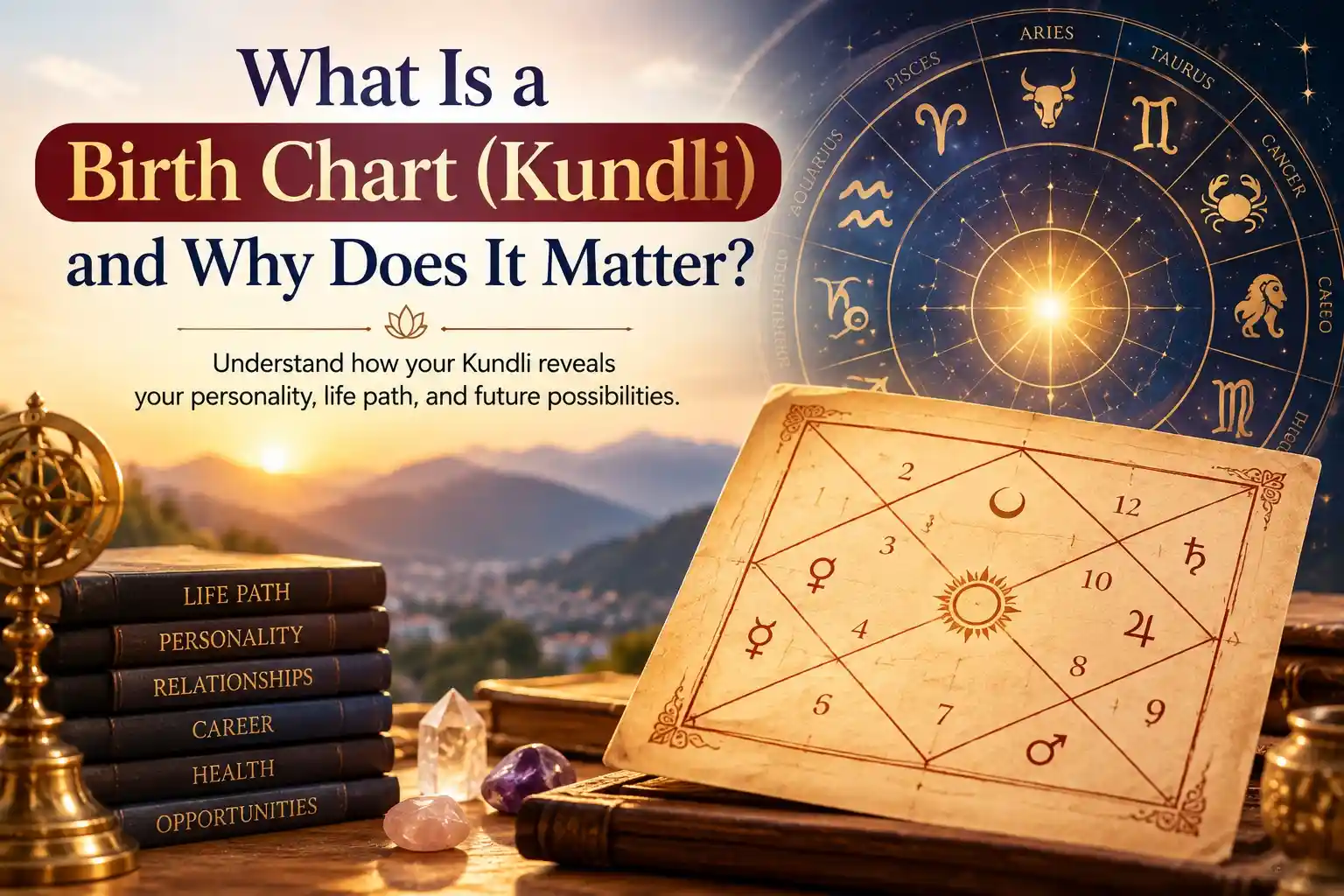
A birth chart, known in the Indian tradition as a kundli or janam patri, is a map of the sky drawn for the exact date, time and place of your birth. It shows where the Sun, Moon and other planets stood in the zodiac at that moment, and which sign was rising on the eastern horizon. In Vedic astrology, it is the starting point of every reading.
Most people search for this topic for a practical reason. They have been asked for a kundli during a marriage discussion, they want to understand a reading they received, or they are trying to make sense of the diamond-shaped diagram in front of them. The answers rest on a few clear building blocks, and none of them require prior knowledge of astrology.
This article explains what a kundli contains, how it is calculated, how astrologers read it, and why birth time matters so much. It also separates what the tradition claims from what science has tested, and covers what to prepare before a consultation. Astrology is presented here as an interpretive practice, not as a substitute for professional medical, legal or financial advice.
What Is a Kundli? A Direct Answer
A kundli is a chart of the twelve zodiac signs and twelve houses, with the nine planets (grahas) placed according to their positions at birth. It is the Indian-tradition form of a birth chart, and in everyday Indian usage it is also called a janam kundli, janam patri or simply a horoscope.
Astrologers use it to describe tendencies, not fixed outcomes. The chart is read for temperament, relationships, career direction and the timing of different life phases. Those readings are traditional interpretations, and they should be weighed alongside your own judgement.
What Goes Into a Kundli: The Building Blocks
Every kundli is assembled from the same parts:
- Lagna (ascendant): the zodiac sign rising on the eastern horizon at birth. It anchors the whole chart and sets the house layout.
- Rashi (Moon sign): the sign the Moon occupied. Vedic astrology gives it nearly the same weight as the ascendant, because it is tied to mind and mood.
- Grahas (planets): the Sun, Moon, Mars, Mercury, Jupiter, Venus, Saturn, plus the lunar nodes Rahu and Ketu.
- Bhavas (houses): twelve divisions, each linked to an area of life.
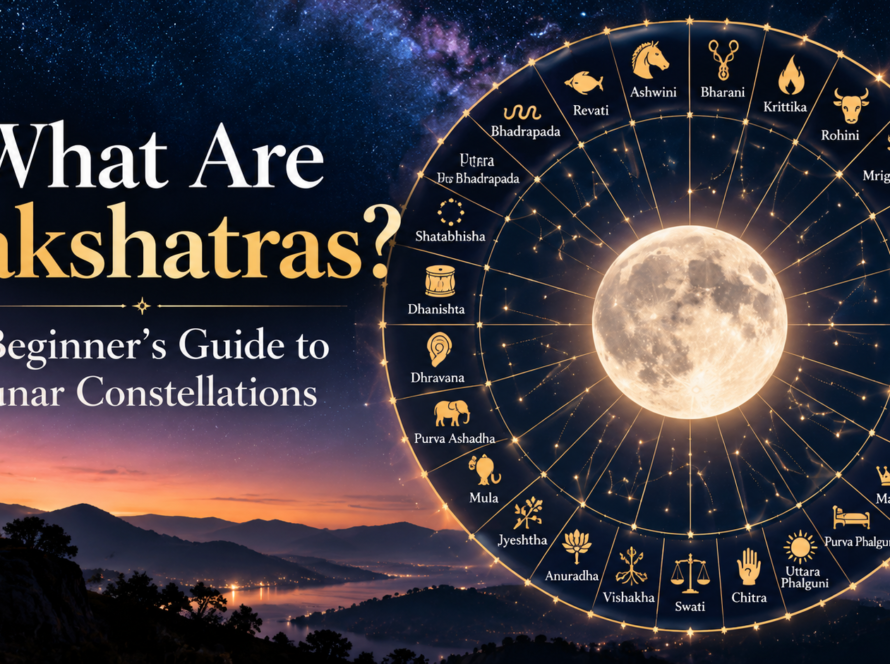
- Nakshatras: twenty-seven lunar mansions that refine the meaning of each placement, especially the Moon’s.
- Dashas: planetary periods, the most common being the 120-year Vimshottari cycle, which sets the timing of the reading.
The Nine Grahas and What They Represent
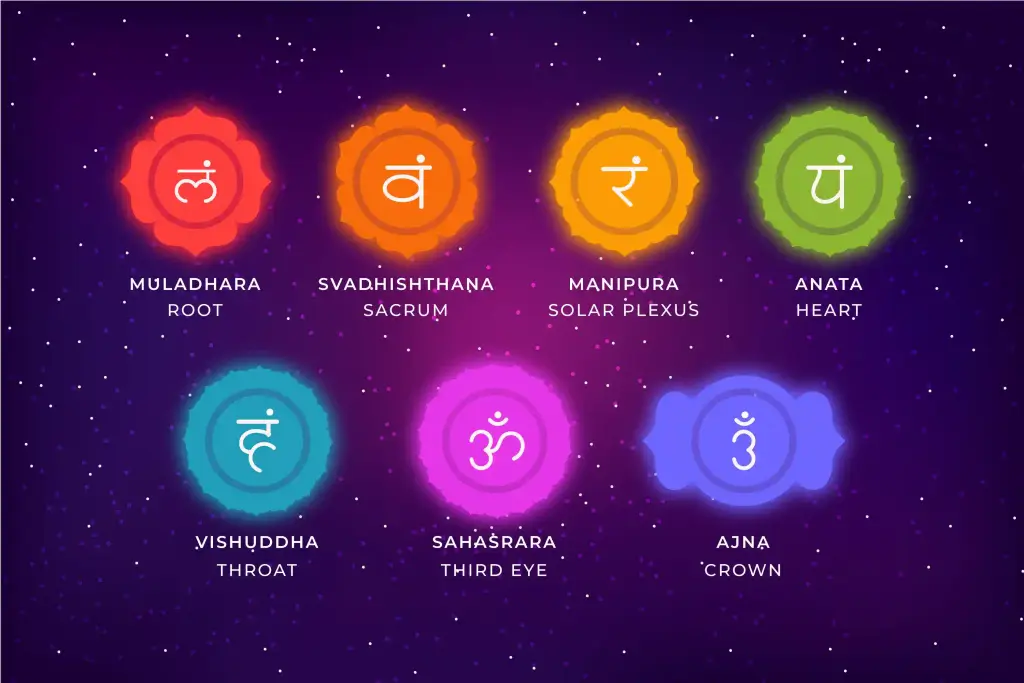
In traditional interpretation, each graha has broad associations:
- Sun: sense of self, authority and vitality
- Moon: mind, emotions and nurturing
- Mars: energy, drive and courage
- Mercury: intellect, speech and commerce
- Jupiter: wisdom, growth and guidance
- Venus: relationships, comfort and the arts
- Saturn: discipline, delay and long-term effort
- Rahu and Ketu: karmic themes, ambition and detachment
A planet’s meaning shifts with its sign, its house and its relationships with other planets, so no placement is read in isolation.
The Twelve Houses at a Glance
Each house is traditionally linked to specific life areas:
- Self, body and personality
- Family, speech and savings
- Effort, courage and siblings
- Home, mother and inner peace
- Education, creativity and children
- Work routines, health habits and obstacles
- Marriage and partnerships
- Change, research and the unseen
- Fortune, dharma and higher learning
- Career and public standing
- Gains, networks and aspirations
- Expenses, retreat and spiritual practice
How a Kundli Is Calculated
A kundli needs three inputs: date, time and place of birth. The place gives latitude and longitude, and the time is converted to a standard reference. Planetary positions are then calculated against the sidereal zodiac, using a correction called the ayanamsa. Our comparison of Vedic and Western astrology explains why this differs from the zodiac used in newspaper sun signs.
Birth time matters more than most people expect. The ascendant changes sign roughly every two hours, so two people born on the same day in the same city, a few hours apart, can have different lagnas and entirely different house layouts. The Moon moves about 13 degrees a day, which is why the Moon’s nakshatra, and the dasha sequence that follows from it, depend on being reasonably close to the right time.
Modern software handles the arithmetic, but it can only be as accurate as the data entered. A hospital record or birth certificate is a better source than family memory.
North, South and East Indian Chart Styles
The same information can be drawn in different layouts:
- North Indian: houses stay fixed and the signs rotate. The ascendant sits in the top diamond.
- South Indian: signs stay fixed in their boxes, and the ascendant is marked in one of them.
- East Indian: used in parts of eastern India such as Bengal and Odisha, with its own arrangement.
The layout changes how the chart looks, not what it says. If you receive a kundli in one style, an astrologer can redraw it in another without altering the reading.
How to Read a Birth Chart: Five Steps for Beginners
Astrologers weigh many factors together, but a basic reading often follows this order:
- Find the lagna and its lord. The ascendant sign and the planet ruling it describe the chart’s overall tone.
- Note the Moon sign and nakshatra. These show emotional temperament and set the starting point of the dasha.
- Look at which planets sit in which houses. This links each planet’s themes to specific life areas.
- Check planetary strength, aspects and yogas. Some placements strengthen a planet, others strain it, and certain combinations carry named meanings.
- Identify the running dasha and antardasha. This places you in a particular chapter of the chart right now.
This is a starting framework, not a complete method. A classical reading also looks at divisional charts such as the navamsa, which is used to study relationships.
Why Does a Kundli Matter?
Within the Vedic tradition, a kundli matters because it offers a structured way to look at your own life. It does not tell you what will happen. It gives you vocabulary for patterns, and a calendar of periods that the tradition associates with different themes.
People commonly use it for:
- Self-reflection: understanding strengths, habits and blind spots.
- Timing questions: weighing career moves, study choices or major commitments against dasha periods.
- Marriage matching: comparing two charts, including the seventh house and Moon compatibility, alongside the guna milan score.
- Spiritual practice: choosing mantras or routines that a practitioner considers suited to the chart.
Interest in this kind of reading has grown locally too, as our piece on why Dehradun is turning to Vedic astrology consultations explains. A kundli is most useful when it prompts better questions, not when it is treated as a verdict. For anything involving health, money or legal matters, it should sit alongside qualified professional advice.
What a Kundli Cannot Do, and What Science Says
Astrology’s predictive claims have not been validated by scientific testing. The best-known test is Shawn Carlson’s double-blind study in Nature in 1985, in which astrologers were unable to match natal charts to personality profiles better than chance. That study examined Western-style charts, and later reviews have not found support for predictive accuracy in either tradition.
That does not make the practice meaningless to the people who use it, but it does mean a kundli should be treated as a framework for reflection. Be cautious about any reading that makes guarantees, predicts disasters, or presents terms such as Mangal dosha or sade sati as reasons for fear. A careful practitioner explains these in context and does not use them to pressure you.
Getting Your Kundli Read by an Astrologer in Dehradun
Preparation makes a reading more useful. Bring your date, exact time and place of birth, ideally from an official record, and write down two or three specific questions. If your birth time is uncertain, say so at the start, since birth-time rectification can sometimes be discussed.
When choosing a practitioner, look for someone who asks for accurate birth details, explains the method in plain language and avoids guarantees. Our guide to choosing an astrologer in Dehradun and our list of signs you have found the right one cover this in more detail.
If you would like a reading based on classical parashari Jyotish, you can Consult Charul Sharma in person in Dehradun by appointment, or online if you are in Mussoorie, Rishikesh, Haridwar or elsewhere. Sessions are available in Hindi and English.
Frequently Asked Questions
1. Is a kundli the same as a horoscope?
In everyday Indian usage, yes. Strictly, a kundli is calculated for your individual birth details, while a newspaper horoscope is a general reading for everyone sharing a sun sign.
2. Can I get a kundli without my exact birth time?
You can get an approximate one, and the Moon sign is often still usable. The ascendant, houses and dashas become less reliable, so an astrologer may suggest birth-time rectification.
3. Does a kundli change over time?
No. The natal chart is fixed at birth. What changes is the dasha running at any given time and the position of planets in transit.
4. Is a free online kundli accurate?
The calculation is usually correct if the data and ayanamsa setting are right. The interpretation text is often generic, because it is not written for your whole chart.
5. Is a kundli necessary for marriage?
It is a long-standing custom in many families, but whether to use it is a personal decision. It should not replace direct conversation about values, finances and expectations.
6. When should someone consult an astrologer about a kundli?
When you want a structured, reflective view of a decision or recurring pattern, and you plan to weigh it alongside professional advice. You can Consult Charul Sharma if you would like a Vedic reading of your chart.
Conclusion
A kundli is a map of the sky at the moment of your birth, built from the ascendant, Moon sign, nine planets, twelve houses, nakshatras and dashas. Its value lies in how it is read: carefully, in context and without certainty about the future.
If you understand what the parts mean and why birth time matters, you can ask sharper questions and judge a reading by its method rather than its promises.
CTA
If you are looking for personalised guidance based on your birth chart, you can book a consultation with Charul Sharma, with sessions available in Hindi and English, in person in Dehradun and online. A kundli reading is a sensible first step if you are new to astrology. Finding the best astrologer in Dehradun is easier once you know what to prepare and what to ask, and this guide is meant to help with both.

1 Comment