
Introduction
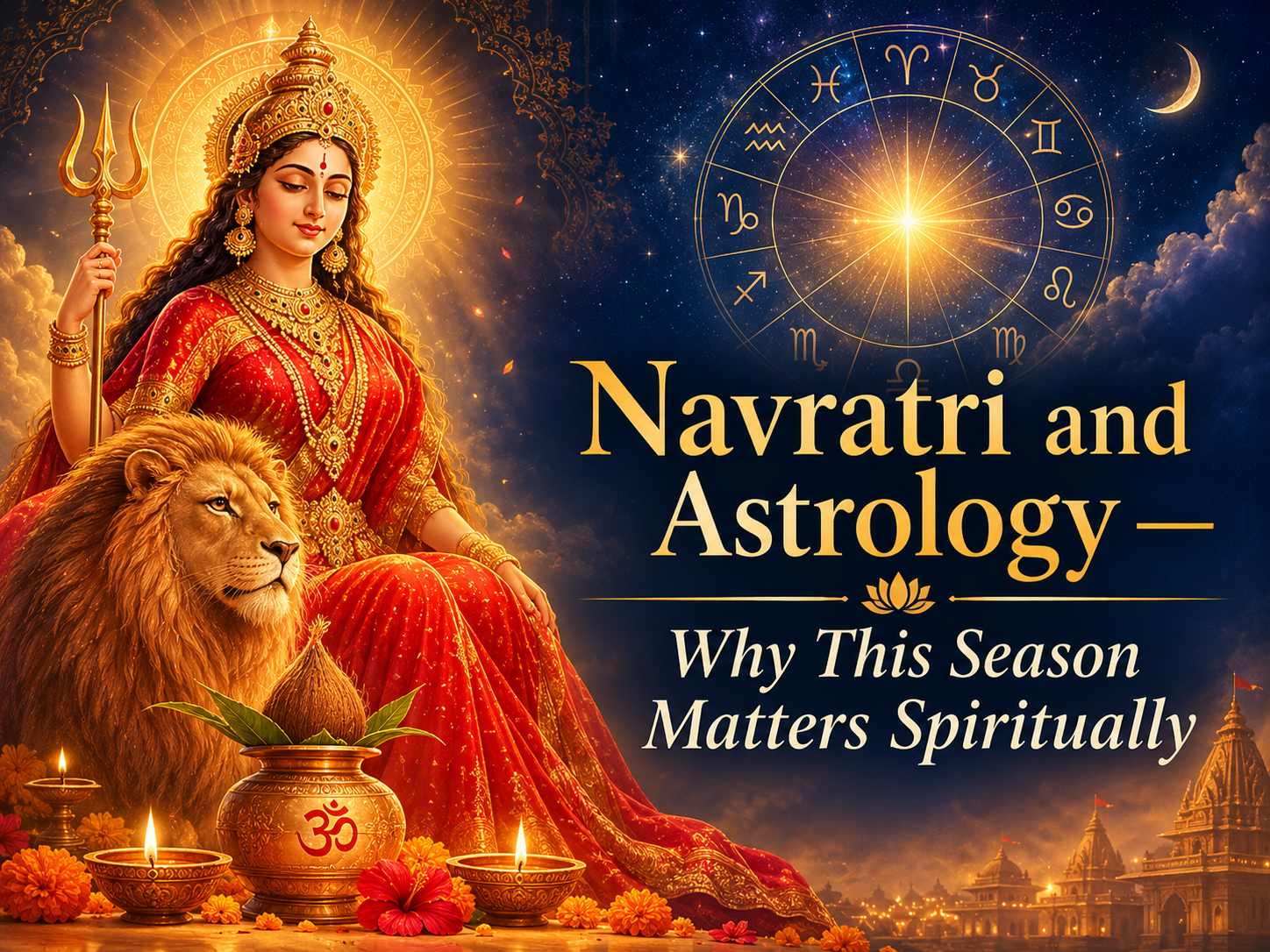
Navratri and Astrology meet at a precise point in the Hindu calendar: the nine nights of Ashwin Shukla Paksha, when the Moon is waxing and devotees worship Shakti in nine forms. Sharad Navratri this year began on 11 October 2026 and ran until 19 October, with Vijayadashami (Dussehra) on 20 October. The festival has closed, but the questions it raises about timing, discipline and inner work remain useful long after the dates pass.
In Vedic astrology, the season draws attention for three reasons. The lunar calendar fixes the nine nights, the Sun moves from Virgo into Libra during the same month, and the nine goddess forms are often matched with the nine grahas. These are traditional interpretations, not scientific findings, and this article labels them that way throughout.
Below, you will find how the nine nights are timed, what each form is said to represent, how your own birth chart may shape your practice, and what to prepare before the next Navratri. Readers in Uttarakhand will also find local context and guidance on when a personal reading may help.
What Is Navratri, and Why Does Its Timing Matter in Astrology?
Navratri is a nine-night Hindu festival dedicated to Goddess Durga and her nine forms, the Navadurga. Its timing matters in astrology because it is set by the Moon’s phase and the lunar month, not by a fixed date on the solar calendar. That is why it shifts every year.
Four Navratris appear in the tradition. Sharad Navratri, in Ashwin (September to October), is the most widely observed. Chaitra Navratri falls in spring and opens the Hindu new year. Two Gupt Navratris are observed more quietly, mainly by practitioners of sadhana.
For astrology readers, the common thread is the waxing Moon. Shukla Paksha, the bright fortnight, is traditionally associated with beginnings, growth and spiritual effort. The nine nights sit at the start of that fortnight.
How the Panchang Fixes the Nine Nights
The Panchang, the traditional Hindu almanac, sets Navratri by tithi, the lunar day. The festival begins on Pratipada, the first tithi of the bright fortnight, with Ghatasthapana, the ritual installation of the sacred pot. The best time for that ritual (the muhurat) differs by city, so families usually check a local Panchang.
Ashwin also begins with Pitru Paksha, the fortnight of ancestral rites. Many practitioners describe the sequence as a clearing of ancestral obligations followed by nine nights of active worship. In 2026, Ghatasthapana fell the day after Sarva Pitru Amavasya, the closing new-moon day of that fortnight.
For official dates and city-specific muhurats, the Drik Panchang Sharad Navratri page is a widely used reference.
The Sun in Libra and the Weight of the Season
During Ashwin the Sun passes from Virgo into Libra, and Vedic tradition treats Libra as the sign of the Sun’s debilitation. A debilitated planet is considered to express its qualities with difficulty. Some practitioners therefore read Navratri as a period when the Sun, which signifies vitality, confidence and authority, has less to give, and devotion to Shakti fills that gap.
Treat this as a symbolic reading. It is a traditional interpretation, and astrologers differ on how much weight to give it. The Moon matters equally here. Ashwin takes its name from the lunar mansion Ashwini, ruled by Ketu, and the Moon’s daily movement through the nakshatras shapes how each night is described.
The Nine Forms of Durga and the Navagrahas
Each night honours one form of Durga, and in several traditions each form is linked to one of the nine grahas. One widely cited tradition ties the nine days to the Moon, Mars, Mercury, Jupiter, Venus, Saturn, Sun, Rahu and Ketu. The pairings below are one commonly cited mapping. Regional and family traditions vary, so treat it as a guide, not a fixed rule.
- Shailputri: Moon
- Brahmacharini: Mars
- Chandraghanta: Venus
- Kushmanda: Sun
- Skandamata: Mercury
- Katyayani: Jupiter
- Kalaratri: Saturn
- Mahagauri: Rahu
- Siddhidatri: Ketu
Read symbolically, the sequence moves from grounded beginnings to fierce transformation and finally to completion. Kalaratri, the form tied to Saturn in this mapping, is traditionally associated with confronting fear. That fits Saturn’s role in Vedic astrology as the planet of discipline and consequence.
Why the Number Nine Matters
Nine is the last single digit and, in Vedic numerology, signifies completion. Traditionally, the number is also connected with Mars. The nine nights, nine forms and nine grahas form a closed set, which is why many practitioners describe Navratri as a complete cycle of inner work and not a collection of separate rituals.
Navratri and Astrology in Practice: Reading It Against Your Birth Chart
The festival is shared, but its meaning for you depends on your own chart. A birth chart (kundli) records the position of the planets, signs and houses at your birth. Astrologers often look at three layers when advising someone about a season like Navratri.
- Moon sign and nakshatra: these show the emotional tone you bring to fasting, prayer or silence.
- Running dasha: the planetary period you are in colours which themes feel urgent. Someone in a Saturn period may find disciplined routines more natural than someone in a Venus period.
- Current transits: slow planets such as Saturn highlight areas where structure is being tested.
Used this way, the nine forms become reflective prompts, not predictions. If Kalaratri’s theme speaks to a fear you are facing, the practice is the reflection, not a promised outcome.
Astrology Consultation Dehradun: Bringing Navratri Themes Into a Reading
People in Uttarakhand often observe Navratri through temple visits, home Ghatasthapana and fasting. Shakti temples such as Mansa Devi and Chandi Devi in Haridwar and Surkanda Devi in the Garhwal hills are traditional places of worship in the region.
An astrology consultation Dehradun families seek around this season is usually less about prediction and more about timing and routine: which Navratri period suits a new habit, how a running dasha interacts with a fast, or which mantra practice fits a particular chart. If you want to Consult Charul Sharma on these questions, a reading based on your own birth details is more meaningful than a generic sign-based forecast.
Readers who prefer a longer, one-to-one session can book a personalized reading and bring their questions about the coming spring Navratri in advance. An astrologer in Dehradun who works from the full chart, not just the sun sign, can also explain which of the nine themes your chart emphasises.
What Astrology Can and Cannot Say About Navratri
Be clear about the boundaries. The dates of Navratri follow astronomical lunar cycles, and that part is verifiable. The links between goddess forms and planets, and the idea that planets are “stronger” or “weaker” in a sign, are traditional astrological interpretations. No scientific study establishes that these influences affect health, finances or relationships.
Practitioners also differ. Some read Navratri mainly as a devotional discipline and use astrology only to choose timing. Others emphasise remedies. A responsible reading offers perspective and does not guarantee results.
A practical note on fasting: Navratri fasts vary widely, and they can affect people with diabetes, pregnancy or other medical conditions. Astrology is not a substitute for medical advice, and anyone with a health condition should check a fasting plan with a doctor.
Practical Ways to Carry the Navratri Approach Forward
You do not need a festival to use what Navratri teaches. These steps work at any time of year:
- Note your Moon sign and nakshatra, and keep them on hand for any seasonal practice.
- Choose one small, repeatable discipline, such as a daily mantra, a fixed wake-up time or a weekly fast, and keep it modest.
- Check your running dasha and any major slow-planet transit before committing to a large undertaking.
- Write down what you want to complete, not only what you want to begin, since nine is a number of completion.
- Mark the next Navratri on a Panchang for your own city, and review your chart a few weeks before it begins.
Frequently Asked Questions
1. How is Navratri linked to astrology?
Navratri is timed by the lunar calendar, and tradition connects its nine nights to the nine grahas. These links are traditional interpretations, not scientific facts.
2. When did Navratri fall in 2026?
Sharad Navratri ran from 11 to 19 October 2026, with Dussehra on 20 October. Chaitra Navratri is the spring observance.
3. Does the Sun in Libra affect Navratri?
In Vedic tradition the Sun is considered debilitated in Libra, and some astrologers read this symbolically. Interpretations vary.
4. Which planet is linked to which Durga form?
One commonly cited mapping pairs Shailputri with the Moon through to Siddhidatri with Ketu, but traditions differ.
5. Can astrology remedies be done during Navratri?
Some practitioners recommend mantra or charity during these nights. These are devotional practices, not guaranteed solutions, and they do not replace professional advice.
6. When should someone speak to an astrologer about Navratri?
It helps when you want your practice timed to your chart, are unsure how a running dasha affects it, or want to plan before the next Navratri. You can Consult Charul Sharma with your birth details for a chart-based reading.
Conclusion
Navratri works as both a festival and a framework: a lunar calendar that sets the dates, a Sun in a traditionally difficult sign, and nine forms of Shakti that give structure to nine nights. Astrology adds a way to read that structure against your own chart, with the understanding that these are interpretations offered for reflection.
Sharad Navratri has ended for 2026, but the work it suggests, reviewing what you carry and what you want to complete, does not depend on a date. The next Navratri is a good point to return to it with your chart in hand.
CTA
If you would like guidance rooted in your own birth chart, you can book a consultation and bring your questions about timing, discipline and seasonal practice. To Consult Charul Sharma, visit the website and share your birth details in advance so the session can focus on what matters to you.