


Introduction
Choosing an astrologer in Dehradun is less about finding the most confident voice and more about finding someone whose method, ethics, and communication you can actually judge. The city offers everything from long-established family practitioners to online consultants, and the quality of guidance varies widely. A polished website or a crowded waiting room says little about how a consultation will feel.
The difference usually appears within the first conversation. A dependable practitioner works from your exact birth details, explains the reasoning behind each observation, and is candid about what a birth chart can and cannot indicate. A less dependable one relies on fear, urgency, or promises that no honest interpreter of astrology can make. Knowing the difference early saves time, money, and unnecessary worry.
This article covers five practical signs that you have found the right person, the warning signs that suggest looking elsewhere, and the questions worth asking before you book. It also explains how a Vedic astrology consultation typically works. Astrology is a traditional interpretive practice, not a scientifically validated one, so the aim is to help you judge professionalism and clarity rather than to predict outcomes.
The Short Answer: What the Right Astrologer Looks Like
The right astrologer works from your exact birth chart, explains how they reach each conclusion, speaks in possibilities, stays within the limits of astrology, and is open about fees and process. Here is the quick view before the detail.
| Sign | What you will notice | What it protects you from |
| 1. Birth data first | Questions about exact time and place of birth | Generic, copy-paste readings |
| 2. Reasoning explained | Your chart is shown and factors are named | Vague, unverifiable statements |
| 3. No guarantees | Words like “tends to” and “may” | Fear and false certainty |
| 4. Limits respected | Referrals to doctors, lawyers, planners | Risky decisions made on astrology alone |
| 5. Open process | Fees and format stated upfront | Surprise costs and pressure |
Sign 1: They Start With Your Birth Data

A real chart reading cannot begin without data. The ascendant (lagna) shifts roughly every two hours, and the Moon’s nakshatra depends on precise timing, so a few minutes can change how a chart is read.
A careful astrologer will ask:
- Where your birth time comes from: a hospital record, birth certificate, or family memory
- Your exact place of birth, for correct calculations
- Whether the time has ever been verified
If the time is uncertain, they should say so. Birth-time rectification, a traditional method of adjusting the time using known life events, produces an estimate, not a fact. Most Vedic astrologers also use the sidereal zodiac with the Lahiri ayanamsa, and knowing which system is used helps you compare readings. A “birth-chart reading” offered without any birth details is not really one.
Sign 2: You Can Follow Their Reasoning
Consider how two astrologers might handle the same concern, a slow career phase.
Astrologer A says: “A difficult time is coming. Be careful.”
Astrologer B says: “You are in a Saturn mahadasha, part of the Vimshottari dasha system, a 120-year cycle Vedic astrology uses to time life periods. Saturn influences your tenth house, traditionally linked to career. Classical texts associate this with delay and discipline, so it may show up as slower recognition. Here is how people often approach such a period.”
Only Astrologer B gives you something to examine, question, or even disagree with. Statements that could apply to almost anyone are a feature of cold reading, not chart interpretation.
A good practitioner also separates classical rules from personal judgement. Phrases such as “traditionally this is read as…” followed by “in your chart, I think it may mean…” show that the astrologer knows where tradition ends and opinion begins.
Sign 3: They Speak in Possibilities, Not Promises
Transits (gochar) and dasha periods describe themes and timing windows, not fixed events. No one can honestly guarantee a marriage date, a job offer, or a financial result. The wording tells you a great deal:
| What you hear | What it usually signals |
| “This period tends to favour planning and study.” | Interpretive, honest framing |
| “Traditionally, this placement is read as…” | Separates tradition from opinion |
| “This will definitely happen.” | Overclaiming |
| “Only I can fix this.” | Dependency and pressure |
| “Act today or your family will suffer.” | Fear-based urgency |
Fear and rushing are pressure tactics. If you leave a consultation anxious instead of informed, pause before acting on anything you heard.
Sign 4: They Know the Limits of Their Craft
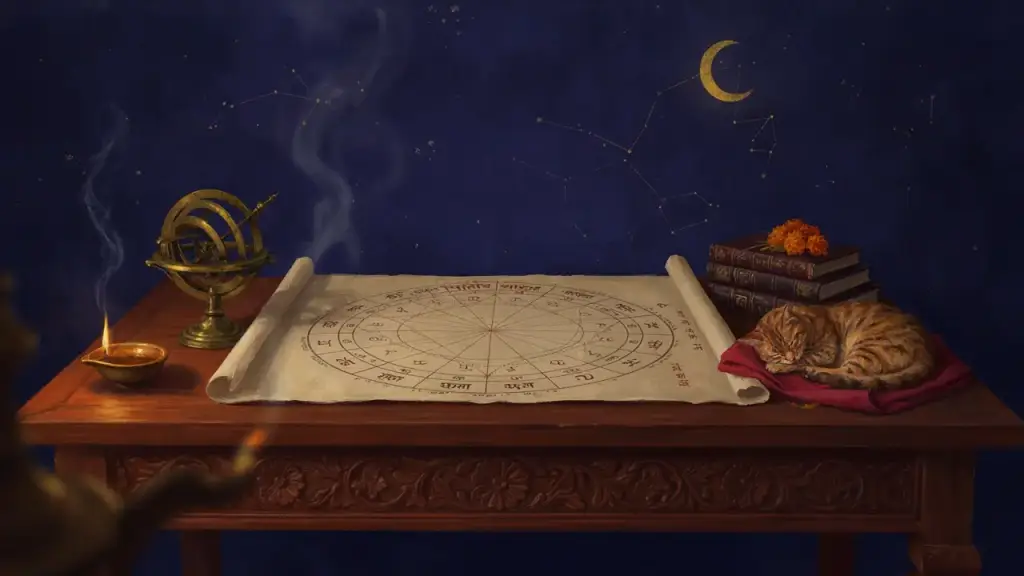
Astrology can prompt reflection on marriage, career, or relocation, but it cannot replace medical, legal, or financial advice. A responsible astrologer says so plainly, points you toward the right professionals, and leaves the final decision with you.
Remedies deserve the same care. Mantras, charity, fasting, and gemstones are common in Vedic tradition. Before accepting any, ask:
- What is it, and what is the traditional reasoning behind it?
- Is it optional?
- What will it cost, and is there a simpler alternative?
- Is anyone claiming harm will follow if I decline?
Be cautious if a remedy is costly, urgent, or tied to a warning of disaster. A trustworthy practitioner presents remedies as optional traditional practices, never as obligations.
Sign 5: They Are Open About Process, Fees, and Privacy
Professional practice looks organized. Before booking, you should know the format, the approximate duration, what is included (chart analysis, written notes, follow-up questions), and the fee. Costs mentioned for the first time at the end of a session are a poor sign.
Your birth details and personal questions are sensitive information, so it is fair to ask how they are stored and whether the session is confidential. A clear answer, given without irritation, tells you the practice takes trust seriously.
Astrology and Science: Keeping the Categories Straight
Good astrologers keep these three ideas apart, and readers should too:
- Traditional view: Jyotish, rooted in ancient Indian texts such as the Brihat Parashara Hora Shastra, holds that planetary positions at birth reflect life themes.
- Practitioner interpretation: how an individual astrologer reads a chart, which varies from person to person.
- Scientific evidence: a double-blind study by Shawn Carlson, published in Nature in 1985, found that astrologers’ chart matching was no better than chance.
Treat astrology as a reflective, cultural, and spiritual practice, not as a forecasting instrument. A practitioner who claims scientific proof is overstating the case.
In-Person or Online: Which Format Suits You?
Many astrologers in Uttarakhand now offer both formats. The reading depends on your chart and the practitioner’s method, not the location, but the experience differs.
| Format | Works well when | Keep in mind |
| In-person | You prefer face-to-face discussion or live in or near Dehradun, Rishikesh, Haridwar, or Mussoorie | Travel time and fixed slots |
| Video call | You want a screen-shared chart and flexibility | Check audio quality and session length beforehand |
| Phone call | You want a simple discussion without a chart display | Ask for the chart details in writing afterward |
How to Verify an Astrologer in Dehradun Before Booking

Astrology is not regulated through a single professional licence in India, so training and credentials vary widely. A practical routine helps:
- Read the practitioner’s own website and confirm a consistent name, address, and contact details.
- Ask about training, years of practice, and focus areas such as Kundli analysis or numerology.
- Treat testimonials as impressions, not proof.
- Book one session before committing to a package.
- Compare two practitioners. Consistent reasoning matters more than dramatic claims.
Common Mistakes When Choosing an Astrologer
Even careful people slip into these habits:
- Choosing by fame or crowd size. Popularity is not evidence of method.
- Expecting exact dates. Astrology deals in themes and windows.
- Arriving without a question. A focused question produces a far more useful session than a general one.
- Buying large packages first. A single session shows you how the practitioner works.
- Switching astrologers until someone says what you hoped to hear. That is validation-seeking, not guidance.
What Happens in a First Consultation
Most sessions follow the same arc. The astrologer prepares your Kundli, then asks what you want to focus on. They review the relevant houses, planetary placements, and your current dasha and transits. Themes and possible timing windows follow, and any remedies come last, with their traditional basis explained. Session length varies, so confirm it at booking.
Five Questions Worth Asking
If you plan to meet Charul Sharma or any other astrologer, bring these:
- Which birth details do you need, and how do you handle an uncertain birth time?
- Which system and ayanamsa do you use?
- Will you show me my chart and explain how you reached each point?
- What are the duration and fee, and are follow-up questions included?
- Are any remedies optional, and what is the reasoning behind them?
Clear, unhurried answers are a good indicator. Evasiveness is not.
Frequently Asked Questions
1. How can I choose a reliable astrologer in Uttarakhand?
Look for someone who asks for accurate birth details, explains the chart logic, avoids guarantees, and states fees upfront. Compare two practitioners and start with a single session.
2. What details are needed for a Kundli reading?
You need your date, exact time, and place of birth. A birth certificate or hospital record gives the most dependable time.
3. How much does an astrology consultation cost?
Fees vary by practitioner, session length, and reading type. Ask for the fee and what it includes before booking.
4. Can astrology predict the future accurately?
There is no scientific evidence that astrology predicts events. Practitioners use it as a traditional interpretive framework for reflection.
5. When should someone consult an astrologer?
People often consult one when facing a major decision or seeking perspective on a life phase. It should complement, not replace, professional advice on health, legal, or financial matters.
6. Should I follow every remedy suggested?
No. Remedies are traditional practices and should be optional. Ask for the reasoning and avoid anything costly or pressured.
Conclusion
The right astrologer in Dehradun is not the one who sounds most certain. It is the one who calculates your chart carefully, explains their reasoning, avoids guarantees and fear, respects the limits of astrology, and is open about fees and process. Judge on those five signs, not reputation alone.
Used thoughtfully, a consultation offers a structured way to reflect on your circumstances. If you want to meet Charul Sharma, a short, focused question and your accurate birth details are the best preparation. The decisions, as always, remain yours.
CTA
If you would like personalized guidance based on your birth chart, you can explore an astrology consultation with Charul Sharma. To meet Charul Sharma, review the services and consultation details on the website and send your questions before booking. Bring your birth details and one clear question for the most useful session.